Electric sauna planning
Sauna Operating Cost Calculator
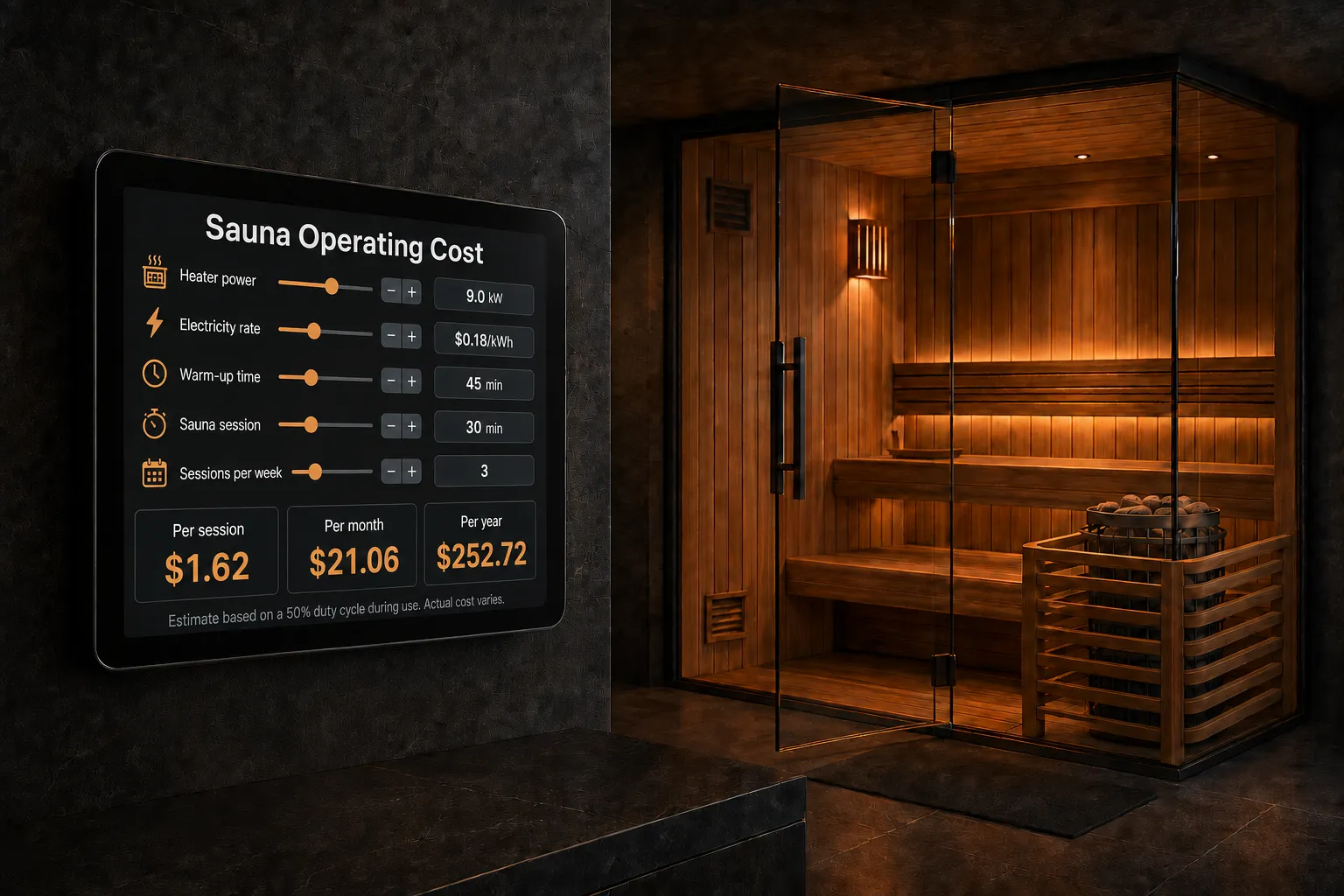
Estimate how much an electric sauna may cost to operate based on heater output, warm-up time, session length, usage frequency, and your local electricity rate.
Last reviewed August 1, 2026
This calculator provides a planning estimate, not a utility-bill guarantee. Actual energy use depends on room insulation, outdoor and starting temperatures, ventilation, glass and masonry surfaces, thermostat behavior, temperature settings, door openings, heater condition, electricity pricing, taxes, fees, and individual use.
For heater sizing and electrical installation, follow the heater manufacturer’s documentation and consult a qualified electrician where required.
Sauna Operating Costs
Estimate the Cost Before the First Session
A sauna heater’s rated power does not tell you the full cost of using it. Preheating time, session length, room heat retention, local electricity prices and the number of sessions each week all affect the final estimate.
The Verdict Lux Sauna Operating Cost Calculator separates the initial warm up period from the heated session that follows. It then applies a planning estimate for heater cycling, combines that energy use with your local electricity rate and shows estimated costs per session, week, month and year.
You can also include optional standby power and compare a second heater under similar usage conditions.
How to Use Your Sauna Operating Cost Estimate
The result is intended to help you understand the likely scale of electricity use before buying a heater or establishing a regular sauna routine.
It can also help you compare different usage patterns, test the effect of a longer warm up period and understand how your local electricity rate changes the annual estimate.
The calculation is not a measurement of a specific installation. For the most accurate picture after installation, compare the estimate with actual electricity use recorded by suitable metering equipment or through your utility data where available.
Start With the Heater’s Rated Output
Enter the heater’s rated electrical output in kilowatts. This information is normally shown on the heater label, product specification sheet or installation manual.
Use the output for the exact model you are considering. Do not enter the recommended room size, breaker rating or an estimated household circuit load in place of the heater’s stated kilowatt rating.
A larger heater can draw more power while it is operating, but that does not automatically mean that it will always cost more over a complete session. Warm up performance, room construction, thermostat cycling and the suitability of the heater for the room also affect total consumption.
Separate Preheating From the Heated Session
The calculator treats preheating and the heated session as two separate stages.
During preheating, the estimate assumes that the heater uses its full rated output for the entered warm up time. A 9 kW heater warming for 40 minutes is therefore treated differently from the same heater warming for 60 minutes.
Session duration begins after the entered preheating period. During this stage, the calculator applies the selected heater cycling estimate rather than assuming that the heater remains at full output continuously.
Enter the time the sauna normally needs to reach your preferred bathing temperature, followed by the amount of time the room remains heated after that point.
Choose a Realistic Room Heat Retention Setting
Once the sauna reaches its temperature setting, the heater normally cycles on and off as the control system responds to room temperature.
The calculator provides three planning assumptions:
- Well insulated room: intended for a properly insulated sauna with limited glass, masonry or other cold surfaces.
- Typical insulated room: intended for a conventional insulated room with a moderate amount of glass and ordinary heat loss.
- High heat loss: intended for rooms with extensive glass, masonry, air leakage, frequent door opening or other conditions that may require the heater to operate more often.
These settings use estimated average shares of full heater output during the heated session. They are not measured efficiency ratings for a specific heater or room.
Use the custom cycling option only when you have a supported reason to enter a different percentage, such as reliable monitoring data from an existing installation.
Understand What Heater Cycling Represents
Heater cycling describes the heater switching on and off to maintain the selected sauna temperature after preheating.
A cycling estimate of 60 percent means the calculation assumes that the heater averages 60 percent of its rated output during the heated part of the session. It does not mean that the heater is 60 percent efficient.
Actual cycling can vary because of:
- Room volume and insulation
- Glass, tile, stone, brick and other cold surfaces
- Starting room temperature
- Outdoor temperature and weather exposure
- Sauna temperature setting
- Ventilation design and airflow
- Door openings during use
- Sensor location and control behavior
- Heater design, stone mass and condition
For that reason, the cycling value should be treated as a transparent planning assumption rather than a promise of actual energy use.
Enter Your Actual Electricity Rate
Use the electricity price shown on your current utility bill whenever possible. Enter the amount charged per kilowatt hour in the selected currency.
Electricity prices can vary substantially by state, utility, supplier, tariff and time of use. A national or state average may provide a starting point, but your own bill is normally more relevant to your household.
Some bills separate energy supply, delivery, taxes and other charges. If you want the calculator to approximate the variable cost associated with additional sauna use, use a reasonable effective rate based on the usage dependent charges shown on your bill.
Changing the currency setting only changes the displayed currency symbol. It does not convert the electricity rate automatically.
Use a Realistic Number of Sessions
Enter the number of times you expect to heat and use the sauna during a typical week.
Each session includes the entered preheating energy and heated session energy. Using the sauna four times per week therefore includes four separate warm up periods.
The monthly estimate is calculated from the weekly result across 52 weeks and divided by 12. This produces a yearly monthly average rather than assuming that every month contains exactly four weeks.
Your actual use may change with the season, household schedule, travel or weather. Consider testing more than one usage scenario if your routine is uncertain.
Include Standby Power Only When It Applies
Some controllers, displays, Wi-Fi modules and connected sauna components may continue to use a small amount of electricity while the heater is not actively heating.
The optional standby setting estimates this consumption during the hours of the week not already counted as preheating or heated session time.
Leave standby use disabled when you do not have a supported wattage figure or when the controls are fully disconnected from power between sessions.
When standby power is relevant, use the figure provided by the manufacturer or a suitable measurement rather than guessing. A small continuous load can add up over a year, but it should not be included without evidence that the equipment actually draws that power.
Compare Heaters Carefully
The comparison option can estimate the difference between two heater configurations using separate output, warm up and cycling assumptions.
This can be useful when comparing a heater that draws more power but may warm the room faster with one that has a lower nominal output and a longer preheating period.
The lower calculated operating cost is not automatically the better heater choice. A heater must still be properly matched to the sauna’s effective volume, construction, electrical supply and manufacturer requirements.
Also consider installation cost, controller requirements, safety clearances, stone capacity, replacement parts, warranty coverage and expected support before making a final decision.
What This Tool Does Not Confirm
The estimate does not verify:
- Actual electricity consumption in a completed sauna
- The exact warm up time for a particular room and heater
- The real cycling percentage of a specific installation
- Whether a heater is correctly sized for the sauna
- Compatibility with the available electrical service
- Breaker, conductor, controller or wiring requirements
- Fixed utility charges that do not change with consumption
- Demand charges, taxes or special tariff adjustments
- Time of use pricing unless reflected in the entered rate
- Installation, maintenance or replacement part costs
- Heat contributed by occupants or other equipment
- Changes caused by weather, ventilation or door openings
Use the result to understand potential electricity use and compare realistic scenarios. Final heater sizing, electrical requirements and installation details should always be checked against current manufacturer documentation and reviewed by the appropriate qualified professionals.
Official References
Useful Manufacturer Resources
Official reference resources for electricity pricing, sauna controls and manufacturer installation guidance.
Review current average residential electricity prices by state and compare them with the rate shown on your own utility bill.
View dataUnderstand the role of sauna controls, temperature sensors and power units in regulating heater operation and maintaining temperature.
Visit sourceAccess official support information, installation manuals, electrical requirements and technical documentation for HUUM heaters and controllers.
Visit sourceAverage electricity prices and manufacturer guidance are reference points only. Your utility bill, exact heater documentation and measured use provide more relevant information for a specific installation.